
Why AI Can't Fake Truth — Steve Ward on Employer Brand Authenticity
Steve Ward on founding the EB Club, why AI is accelerating a trust crisis in talent acquisition, and what authentic employer branding looks like now.

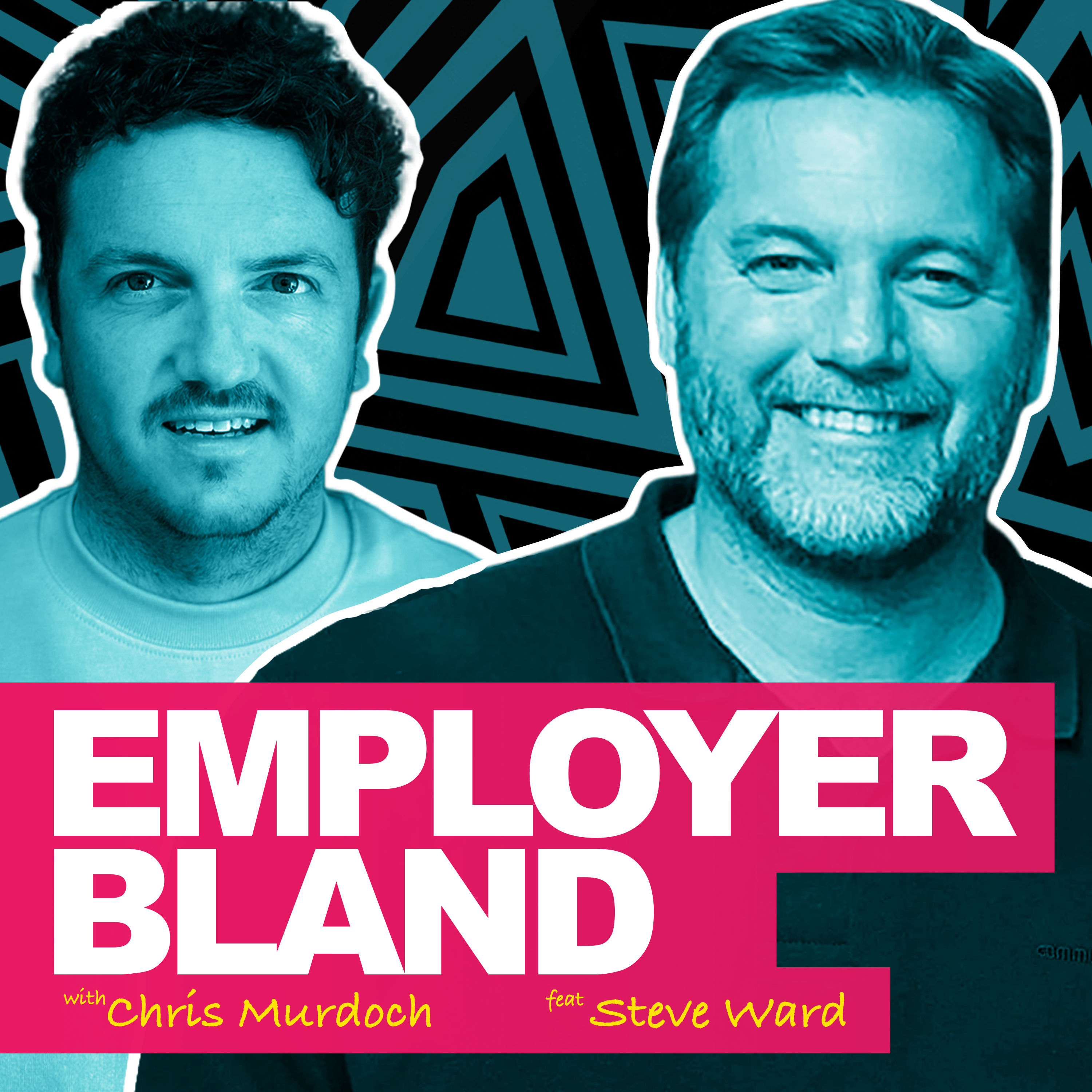
Trust is breaking down — in media, in platforms, in organisations — and AI is accelerating that erosion. For Steve Ward, who has spent decades building communities around employer brand and watching recruitment cycles come and go, the current AI moment is the first one that genuinely concerns him.
Steve Ward founded the Employer Branding Club, built and ran Universum's UK expansion, and has spent the better part of 30 years working at the edge of what employer brand can become — long before the term had wide currency.
Being ahead of the curve has a cost
- Ward started in retail, moved into recruitment in the early 90s, and spent years being told his methods were wrong: fewer calls but better researched, community-building instead of cold call volume, social media when it was still regarded as a distraction.
- Cloud 9, his recruitment agency, operated through community managers rather than recruiters — generating candidate flow through trust and value rather than through what the agency had to sell.
- The Snapchat test: his 19-year-old social media manager, a user himself, delivered the verdict Ward needed. "Will you bloody recruiters leave us alone on Snapchat?" Being early doesn't mean being everywhere.
- When a fellow conference speaker publicly tore his social recruiting talk apart, Cloud 9 won an innovation award announced by that same speaker two weeks later.
The EB Club: what practitioners actually need
- Ward started the Employer Branding Club because attending a talent acquisition conference cost £300 and delivered one employer brand talk. Practitioners needed a room of their own.
- 100 spaces were filled in two days. Covid arrived before the first in-person event; the first digital version attracted 270 sign-ups with never fewer than 180 live during three hours.
- The Club operates on Chatham House rules — the point is a space where practitioners can ask real questions, share real failures, and hear real stories rather than polished conference presentations.
- Regional nuance matters. Krakow drew 55–60 people to an event Ward wasn't sure about. The same employer branding principles apply across markets, but there is always one local ingredient that distinguishes smart localised thinking from generic output.
What AI is doing to employer brand trust
- Ward draws a line between AI as process efficiency — removing low-value tasks, synthesising data — and AI as a replacement for the human judgment that defines good employer branding.
- Legal cases are stacking up: candidates rejected 80–100 times by the same ATS logic, with no recourse. Job applications, interviews, and rejections are emotionally significant junctures for people. Automating them without human accountability has consequences for brand.
- An AI-generated employer brand video Ward judged at an awards show was immediately identifiable: everyone polished, representation performed rather than real, no rough edges. It scored low. The absence of authenticity was more legible than any technical flaw.
- Young people are being told not to trust politicians, media, organisations. AI adds another layer. The employer brand response is to stop selling a curated version of the truth and start demonstrating the lived experience.
From selling to trusting: where EVPs are heading
- Original EVPs were built for talent acquisition — designed to sell a selected truth to prospective employees. That model is showing its limits.
- Ward's concept of the "bloodline": when you really listen to a company, you find the specific, slightly geeky, unguarded things people say to each other. Those words, not the curated messaging, are what authentic employer brand identities are built from.
- A moment from an AstraZeneca project: a researcher's voice cracked when she talked about her colleagues and the vaccine work. The video team wanted to edit it out. Ward insisted they leave it in. That moment of unguarded emotion is where trust sits.
- "Truly listen" — not collect, listen. The difference between scraping signals and sitting with people until someone says something they didn't plan to say.
Listen to the full episode:
https://permalink.castos.com/podcast/38144/episode/2497914